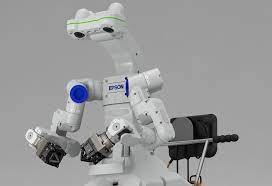
With an innovative combination of robotics and artificial intelligence, Boston Dynamics has reimagined four-legged mechanical wonder Spot as a charismatic tour guide.
Armed with the power of OpenAI’s ChatGPT and other large language models (LLMs), Spot has been transformed from an audit assistant into an interactive robot that can chat, answer questions, and offer tours with a touch of fun and nuance.
This evolution in Spot’s capabilities is a result of Boston Dynamics exploring the broad potential of foundational models—complex AI systems that are trained on extensive data sets and can exhibit emergent behavior.
Contents
From Control to InteractionTechnical crewEmerging BehaviorsHuman TouchChallenges and Prospects
Previously known for his inspection skills, Spot now gains new abilities as he wanders the halls of Boston Dynamics. Equipped with an array of sensors and AI-powered speech and text recognition tools, Spot demonstrates a remarkable ability to interact with people in real time. This interaction isn’t just about presenting dry facts; it’s about creating an engaging, informative experience that may include some impromptu role-playing and even humor.
Technical crew
This transformation required Spot to be equipped with a vibration-resistant speaker housing to project its new sound. Controlled by an external computer using Spot SDK, the robot integrates OpenAI’s ChatGPT API upgraded to GPT-4 and various open source LLMs. Spot’s tour guide persona is also enhanced by visual question-answering patterns that allow him to identify objects he “sees” with his cameras and answer questions about them.
Emerging Behaviors
Spot’s interactions during the tours revealed unexpected behavior, such as independently asking for help or identifying ‘parents’ among older robot models. While the Boston Dynamics team is quick to clarify that this doesn’t mean LLMs are conscious or intelligent in a human-like way, these actions highlight AI’s capacity to make statistical associations and adapt to new contexts.
Human Touch
To contribute to Spot’s human-like interactions, the team used text-to-speech services and programmed body language into the robot, allowing its robotic arm to turn towards people and ‘talk’ to them by mimicking the movements of a human mouth.
Challenges and Prospects
Despite the successes, the team also acknowledges limitations, such as the LLM’s tendency to fabricate answers or the awkwardness of delayed answers. However, the team is optimistic about the future, envisioning a world where robots understand and act on verbal instructions, reducing the learning curve for human users and increasing the utility of robots in a variety of fields.
Spot’s new role as a tour guide represents a significant step in the ongoing convergence of artificial intelligence and robotics. It highlights the potential of these technologies to provide not only functional benefits, but also cultural context and a whimsical touch to our interactions with machines. The experience gained from this proof of concept promises to pave the way for even more sophisticated and seamless human-robot collaborations in the future.
Need to explore the role of AI in SEO? So keep reading more.
Search engine optimization (SEO) is an important part of digital marketing that aims to optimize website content to gain greater visibility on search engine results pages. Of course it doesn’t stay in place.
Over the last few years, the strategies used in SEO have evolved significantly, particularly due to the emergence of artificial intelligence (AI) and machine learning (ML), both of which have changed the way search engines now rank websites.
So, in such an evolving world, the only way to succeed and remain competitive in the SEO landscape is to leverage AI and ML algorithms. In this article, I will examine the role of artificial intelligence in SEO, how it is used today, and its potential in the future.
I will also look at how businesses can leverage this technology to improve their search engine rankings and drive more traffic to their websites. Let’s get straight to the point!
Before going further, let’s understand what artificial intelligence is. You’ve probably heard of tools like: ChatGPT , ZebraCat, PercyLab, and others. All of these tools are AI-powered, giving them the ability to understand human-submitted queries with exemplary accuracy.
Now let’s move on to the topic of artificial intelligence. Essentially, it is the ability of machines to perform tasks that would normally require the involvement of a human; these include:
Seeing things;
Recognizes voice commands;
To make decisions;
Translate languages and much more.
This technology is not new, but it has become quite widespread in recent years. In addition, today artificial intelligence is constantly trained due to the emergence of machine learning, which allows it to easily analyze large volumes of data, recognize behavioral patterns and make predictions based on recovered data.
Artificial intelligence, machine learning and SEO
But with the rise of Big Data, businesses began to realize the potential of machine learning to solve complex problems and gain insights from large data sets. This has led to the development of new machine learning techniques and the creation of specialized tools and frameworks that make it easier to build and deploy machine learning models.
Now machine learning in finance Its ability to handle complex financial data analysis makes it a valuable tool for risk assessment and fraud detection. Additionally, in education, artificial intelligence provides opportunities for personalized learning experiences, while in healthcare, these technologies contribute to advances in diagnosis and treatments.
What about SEO?
AI and ML are now transforming SEO by providing more advanced and effective strategies to help improve search engine rankings, increase your website traffic, and improve user experience. Here are some of the ways AI and ML achieve this:
Better search relevance.
Personalized search results.
Voice call.
Natural language processing.
Content optimization.
Searching for pictures and videos.
Let’s take a closer look at each.
Content optimization
Artificial intelligence and machine learning are also widely used to analyze content, including its structure, use of certain words, accuracy of information, punctuation and spelling. This factor should be taken into account when optimizing content for search engines.
For example, when your content revolves around IoT healthcare solutions , it is crucial to ensure that it is highly informative and targets an advanced audience looking for in-depth information about the product and related topics.
Writers and experts face challenges when creating content on such topics as it must appeal to both the target audience and the search engine. Various AI SEO tools and AI SEO friendly copywriters simplify this task several times.
Additionally, some services use artificial intelligence and machine learning technologies to improve the quality and reliability of academic content. These services use advanced algorithms to perform comprehensive literature reviews, analyze data, and generate accurate citations.
Using research paper writing services students and researchers can save time, ensure the accuracy of their work, and get valuable opinions from experienced professionals in their field.
Better search relevance
Search engines use algorithms to analyze millions of web pages and provide users with the most relevant results. But while in the past they relied solely on factors like keyword density, meta tags, and backlinks, today they use advanced machine learning algorithms that allow them to understand the intent behind each request.
In practice, this means that simply stuffing content with keywords, as spammers did a decade ago, is not enough to rank higher in search results. For the Google RankBrain algorithm to identify a resource as useful and relevant, the resource must contain meaningful content that matches the user’s search query, even if no exact keywords are used.
Personalized search results
With the help of AI and ML, search engines can now deliver personalized search results based on the user’s search history, location, and preferences. For example, if multiple people use the same keyword when searching the internet, the search results will never be the same.
For SEO experts, this means two things:
There is no longer a single “best” outcome;
Strategies should be created based on target audience segments and interests and not just based on the use of keywords.
Voice call
The rise of advanced voice assistants such as Siri, Alexa, and Google Assistant has now changed the way people search for information. According to Adobe research, 48% of adults surveyed in the United States admitted to using voice for general web searches.
Artificial intelligence and machine learning algorithms are used to improve speech recognition and natural language processing; This means SEO strategies should be optimized for voice search queries.
Challenge? Since people often use conversational queries during voice search, optimizing content with short keywords is no longer enough. It has become necessary to include long-tail keywords to increase the ranking of a site.
Many long-tail keywords, for example “ How to buy Ripple in India ”, are identified by the number of words they contain. It is fake. It all depends on the search volume. However, some short-tail keywords, unlike those consisting of five words (or more), have a monthly search count less (<100).These keywords can receive thousands of searches each month.
Apart from this, voice search is often used to identify nearby services and businesses, so it is important to consider local search results when developing an SEO strategy.
Natural language processing
Natural language processing (NLP) is a subfield of artificial intelligence that focuses on the interaction between computers and human language. With the help of NLP, search engines can now understand the context and intent of a query; This means SEO professionals should create their strategies with semantic search in mind.
To give you an idea, initially Google algorithms only used keywords to decide whether content was relevant or not. Now with AI and ML, they understand the context of a written article based on the words and phrases before and after keywords, as well as the subtleties of a query, allowing them to rank shorter and more relevant websites higher.
If you want to optimize chatbot integration and get the best results, hire Node.js developers. This allows you to leverage the power of Node.js to deliver great user experiences and enhance the functionality of your chatbot system.
Image and video search
Another area that is transforming thanks to the integration of artificial intelligence and machine learning is visual and video search. It hasn’t been that long since tools like Pinterest Lens and Google Lens appeared, but it’s already pretty clear that the trend of using visual and video search to find information online is very strong.
With this in mind, SEO professionals make use of alt tags, metadata, descriptive filenames, etc. to help search engines understand their context and match them with relevant search queries. should optimize their visual content, including the use of
Opportunities for businesses to leverage AI and machine learning for SEO
Now that we’ve covered the SEO areas most impacted by the rise of AI and ML, let’s take a look at how businesses can leverage these technologies to improve their SEO strategies and gain a competitive advantage.
In general, SEO strategies should be created focusing on the following:
User purpose;
Use of long-tail keywords;
Local SEO;
Visual search;
Performance analysis.
You can find more information about each below.
User intent
By integrating artificial intelligence and machine learning, search engines can now understand the intent of a user query, making it necessary to create an SEO strategy based on user needs.
To put this into practice, first conduct extensive keyword research to make sure you understand the user’s intent behind a search query. Based on this information, create content that meets this goal and also provides information that is valuable to them.
Use long-tail keywords
With the popularity of voice searches, it has become necessary to optimize content with long-tail keywords that sound as natural as possible in the language people use when searching online.
When chosen correctly, long-tail keywords help you get more traffic by targeting the right audience, making their use a must-have in an SEO strategy.
For example, users can provide information and analysis on “ et prediction ”, Ethereum price predictions. Stay up to date with the latest market trends and analysis to provide accurate and reliable information to your audience.
Local SEO
As more people use voice search to find information online, local SEO cannot be neglected. If you haven’t yet optimized your Google My Business profile and added local business listings, now is the time to do it. Otherwise, you’ll lose a lot of local traffic.
image search
As we mentioned before, visual search is another popular way to find information online. With this in mind, whatever type of visual content you have on a website, make sure it is fully optimized for search engines and includes alt tags, meta descriptions, titles, etc. It’s important to make sure it’s included.
It goes without saying that your content should also be visually appealing and relevant to user search queries. If it isn’t, there’s no point in publishing it in the first place.
Performance analysis
Finally, it is important to track and analyze the results of SEO efforts to ensure the success of an SEO campaign. Without monitoring and analysis, you won’t know what works and what doesn’t; This can lead to waste of time and resources.
Therefore, the first step is to create analytics. Google Analytics is a popular choice and can provide valuable insight into your website and user behavior patterns.
Once you’re done, you’ll need to keep a close eye on your rankings. To do this, you can use analysis tools such as:
Semrush
SEO Power Pack
The one that suits you best.
Of course, you also need to know the volume of traffic and conversions you’re getting. By measuring these KPIs, you get an idea about the impact of your SEO efforts on users and whether they meet your expectations.
Then analyze your content. Look at your page’s click-through rates (CTR) to understand how it’s performing in search engines and identify opportunities to optimize your content for search engines.
Finally, check your backlink profile. By doing this, you will not only learn how your website is performing, but you will also be able to identify opportunities to get new backlinks from authoritative websites.
FAQ on the Role of Artificial Intelligence in SEO
How can artificial intelligence help SEO optimization?
Using AI-based analytics tools like Insights streamlines the SEO action item evaluation process . Rather than reviewing multiple reports, AI technologies can find patterns and realize the benefit of targeting one keyword over another.
Why is artificial influence important for SEO?
AI-powered tools can analyze user behavior and provide personalized recommendations to improve website usability, loading times, and other factors that affect technical SEO . But these are just a few examples of how AI impacts SEO
How to use artificial intelligence and machine learning in SEO?
SEO AI is the use of artificial intelligence-based technologies to help improve website SEO.
This implies analyzing data and using machine learning (ML) algorithms to determine the best keywords, content structure, and other factors that help a website rank higher on the SERP
What are popular AI tools for keyword research?
Some of the commonly used AI-based keyword research tools include SEMrush, Ahrefs, and Google’s Keyword Planner.
Can AI really improve the quality of my content?
Absolument.
AI tools can analyze your content for readability, suggest improvements, and even create high-quality content. This ultimately improves the overall quality of your content.
How does artificial intelligence predict user behavior?
Artificial intelligence uses advanced algorithms and data analysis to identify patterns in user behavior. This data-driven approach allows you to effectively tailor your content to meet user needs and preferences.
Are there free AI tools for content optimization?
Yes, some AI-powered content optimization tools offer free versions with basic features. Examples include Grammarly and Yoast SEO
Why is voice search optimization important?
With the proliferation of voice-activated devices and voice assistants like Siri and Alexa, voice search optimization ensures your content remains accessible and relevant to a wider audience.
What is the best use or example of AI in SEO and marketing?
Artificial intelligence can be used in marketing personalization, predictive analysis , content writing, video production, competitive intelligence, social media marketing, advertising, etc.
Will artificial intelligence replace SEO?
Artificial Intelligence Could Change How SEO is Done, But It’s Unlikely to Replace the Entire Profession . While AI can automate certain aspects of SEO, such as keyword analysis and technical site audits, it still requires human expertise and creativity to develop and implement effective strategies.
How will artificial intelligence change websites?
One of the most important ways AI is changing websites is through the use of natural language processing (NLP) and machine learning (ML) technologies .
NLP allows machines to understand and interpret human language, making it easier for users to find information using natural language queries.
How does AI help Google Search?
The main way search engines use artificial intelligence is to rank web pages, videos, and other content in search results . Google (and other search engines) rely on sophisticated artificial intelligence to determine how to rank content.
What are the limits of artificial intelligence in SEO?
Limitations of AI-Generated Content for SEO: Can extract inaccurate, unreliable, or even biased information . In the same vein, artificial intelligence models are also based on limited data.
For example, ChatGPT is limited to pre-2021 data
How to use artificial intelligence for SEO keyword research?
Use AI Keyword Generator for Keyword Research
Step 1: Conduct a keyword search using a reliable AI keyword generator.
Step 2: Check the search data in Google Keyword Planner.
Step 3: Create an SEO summary.
Step 4: Optimize Content for SEO Success.
Conclusion
To summarize, as search engines evolve and improve, the role of artificial intelligence and machine learning in SEO continues to grow. Artificial intelligence and machine learning algorithms can analyze large volumes of data, recognize patterns and trends, and make more informed decisions about strategies.
But this does not mean that human participation is no longer necessary. SEO experts still play a vital role in analyzing data, interpreting results, and making strategic decisions. So if you want to run a successful SEO campaign and maintain your competitive advantage, the best thing to do is to combine the two: Leverage the power of AI, ML, and human expertise.
Epson Robots announced the launch of the GX-B Series SCARA robots. This highly anticipated release aims to redefine industry standards with the combination of speed, efficiency and precision.
Contents
GX-B SeriesHeart of the Robot: RC700E ControllerAdditional Features: GX-B Series Highlights
The GX-B Series includes four different models: GX4B, GX8B, GX10B and GX20B. These models offer payload capacities ranging from 4 kg (8.8 lb) to a stunning 20 kg (44 lb) and are capable of reaching heights of up to one meter (39.4 inches). Known for its unmatched speed and precision, this series is powered by GYROPLUS vibration reduction technology, ensuring fast production speeds and a seamless motion control experience.
Curious eyes are waiting for the GX10B model to be introduced to the public at The Assembly Show in Rosemont, Illinois, between October 24-26.
Heart of the Robot: RC700E Controller
The GX-B Series is powered by the RC700E robot controller, which is changing the game in automation. This controller not only increases productivity, but with appropriate risk assessments, it also enables harmonious interactions between humans and robots without the need for safety barriers. Key features include smart servo drives integrated with GYROPLUS technology, SafeSense technology for advanced safety measures and the ability to run multiple tasks simultaneously.
Additionally, the RC700E controller offers unmatched flexibility. By integrating both PC-based controls and a real-time engine, it optimizes operations and significantly reduces the potential need for physical security barriers. This leads to a reduction in both operating cost and footprint for businesses.
Additional Features: GX-B Series Highlights
Best Versatility: Robots can adapt to a variety of configurations, including table, wall and ceiling mounting. While reach ranges vary for different models, the GX20B has the longest reach at 1,000 mm.
Superior in Durability: These robots are designed for high-density environments. They come in Standard, ESD, Cleanroom and protected IP65 models and are TUV certified as standard.
Ready for Expansion: The GX-B Series features a variety of integrated options such as Vision Guidance, Parts Feeding and Conveyor Tracking, providing a customized fit for industrial needs.
Industry 4.0 Compatibility: With advanced OPC UA robotic connectivity, these robots are ready for next-generation integration and monitoring.
Willing businesses can get their hands on the GX4B and GX8B now, while the GX10B and GX20B will be available in January 2024. Epson Robots, as one of the pioneers in the field of robotics, maintains its global presence with more than 150,000 units with the GX-B Series.
With the GX-B Series, Epson is preparing to push the boundaries of automation. As robots become established in global industries, an increase in efficiency, productivity and innovation is expected. This move by Epson not only emphasizes its commitment to technological excellence, but also sets an example for the future of robotics.

Following a technological renaissance, the MassRobotics Accelerator was launched , setting a new precedent for robotics startups . Located in the heart of Boston’s Seaport Innovation District, this program represents a significant leap forward in the development of robotics entrepreneurship. This transformative 13-week journey was made possible through a partnership with the Massachusetts Technology Collaborative (MassTech) and marks a strategic move to strengthen Massachusetts’ position as the cradle of robotic innovation.
The program, which stands out with its zero equity approach, provides a rare opportunity for founders to grow without diluting their shares by providing a significant fund of $ 100,000 to each startup. The initiative aims to select ten startups that have the potential to redefine the robotics landscape.
Selected founders will engage in a curriculum that covers the intricacies of product development, market discovery, pitching and team dynamics, and is rigorously designed to meet the unique challenges of robotics startups.
Participants will have the privilege of accessing MassRobotics’ state-of-the-art facilities, including prototyping laboratories equipped with state-of-the-art tools and areas dedicated to Industrial Automation and Human Robot Interaction (HRI).
The culmination of the program will be a Demo Day at the Robotics Summit and Expo, where entrepreneurs will showcase their innovations to a crowd of investors and industry heavyweights.
A testament to the collaborative spirit of the Boston tech ecosystem, this initiative offers promising robotics startups not only funding but also a gateway to a network of industry experts, mentors, and potential investors. This program, whose applications are open until November 30, serves as a guide for robotics startups looking for unique growth opportunities.
The strategic partnership with Robotics Summit & Expo further strengthens the program’s reach, underscoring MassRobotics’ commitment to advancing the future of robotics. The combination of unsubsidized funding, mentoring and industry connections forms the core of this accelerator, poised to spur innovations that will resonate on a global scale. This effort reflects a collective passion to see local talent catalyze developments that can spread to industries around the world and confirms the city’s pioneering spirit in robotic innovation.