Home Blog

GPT-5.6: OpenAI is reportedly preparing a new generation of more powerful AI, but the mystery remains.

For several weeks now, the most attentive ChatGPT users have sensed that something has changed. More thoughtful responses, better programming performance, more consistent results on complex tasks: the signs are multiplying. This is fueling a growing rumor within the artificial intelligence ecosystem: OpenAI could unveil GPT-5.6 as early as this week, perhaps even today .

No official announcement has been made at this stage. However, testimonies from testers, discussions on X and speculations from the AI ​​community converge on the same scenario: OpenAI is quietly preparing the arrival of a model capable of taking a new step forward in terms of reasoning, coding and autonomous agents .

The rumor originated from several user reports claiming that some recent versions of ChatGPT seem to produce significantly better results than those observed previously.

Developers report more reliable code generation, better-built web interfaces on the first try, and improved understanding of complex instructions . According to several accounts, the AI ​​also seems to take longer to respond, a behavior that could indicate a more thorough deliberation phase before the final generation.

This development fuels a widely circulated hypothesis: OpenAI is currently testing a new generation of model with a limited number of users via certain variants of GPT-5.5 Pro.

GPT-5.6 might prioritize reasoning above all else

If the information circulating proves accurate, the main advancement would concern reasoning capabilities. Initial feedback describes a more efficient model for:

  • understanding complex instructions
  • plan tasks in several steps
  • solving logic problems
  • limit errors in long workflows
  • execute complete projects with fewer corrections

Several developers claim that certain tasks which previously required several tens of minutes of iterations can now be performed much more smoothly.

This development reflects a trend observed among all major players in the sector. After focusing on model size and text generation, the new battle is now being fought over the quality of reasoning .

An even more gigantic pop-up window

One of the most discussed aspects concerns the model’s contextual memory. According to several unconfirmed leaks, GPT-5.6 could increase its context window to 1.5 million tokens.

By comparison, OpenAI’s most advanced models already have exceptional capabilities to handle vast codebases, comprehensive research papers, extremely long conversations, and complex projects requiring persistent memory.

An increase to 1.5 million tokens would allow us to go even further by reducing context loss during particularly ambitious tasks.

For developers, researchers, and businesses, this would likely be one of the most significant developments in the model.

Coding at the heart of OpenAI’s strategy

Since the beginning of the year, competition in AI-assisted software development has intensified. OpenAI now faces fierce competition: Anthropic with Claude , Google with Gemini , DeepSeek , Zhipu AI and its recent GLM-5.2, and several next-generation open-source models .

In this context, GPT-5.6 seems to want to strengthen its lead in professional uses.

Early testers report a better understanding of software architectures, more robust project planning, more consistent code generation, and enhanced performance for autonomous agents.

Some feedback also mentions progress in creating SVG interfaces, 3D design, and interactive simulations. OpenAI thus seems to be pursuing its goal of transforming ChatGPT into a true intelligent development environment rather than a simple conversational assistant.

More powerful… but also slower?

However, not all feedback is unanimously enthusiastic. Several users report that complex tasks now take longer to complete. This apparent slowness could be the price to pay for more reliable and better-structured responses.

In other words, OpenAI seems to prioritize the quality of reasoning over raw speed .

A strategic direction that reflects recent market trends: professional users often prefer to wait a few extra seconds if it avoids multiple correction cycles.

A response to competitive pressure

The emergence of GPT-5.6 comes at a particularly tense time for the industry. Chinese laboratories are rapidly accelerating their progress, while Anthropic continues to gain ground among developers thanks to its programming performance.

OpenAI retains a dominant position, but this lead is now being challenged in several key segments.

A more efficient model, coupled with a potential reduction in usage costs, would allow the company to solidify its leadership among developers, businesses, content creators, and power users . The battle is no longer solely about technical capabilities. It now also concerns operating costs and the accessibility of models at scale.

A launch date is already being discussed.

Several observers are suggesting June 25th as a potential launch window . AI-focused prediction markets have also seen the probability of an announcement increase in recent days.

However, there is currently no official evidence to confirm this date.

As is often the case in the world of AI, the gap between rumors, internal tests and public announcements remains considerable.

Between enthusiasm and caution

At this stage, GPT-5.6 remains a hypothetical model. OpenAI has not confirmed its existence, its technical specifications, or its deployment schedule. However, the increasing number of reports and changes observed by some users suggest that a significant evolution could indeed be in the works.

If the rumors prove true, GPT-5.6 could mark a new stage in the evolution of AI assistants: less focused on simple text generation and more oriented towards reasoning, planning and executing complex tasks.

In an industry where each generation of models redefines market expectations, OpenAI knows it can no longer simply be better. It must continue to widen the gap.

Intel Core Ultra vs Apple Silicon: Which philosophy should you choose for your next compact desktop?

By 2026, the mini PC is no longer a compromise. It has become a miniature workstation, sometimes more powerful—and above all, smarter—than the consumer towers of just a few years ago. But beneath this move upmarket, a divide has emerged: two visions of the “compact desktop” are clashing.

On one side, Intel and the Windows ecosystem are betting on modularity, extensibility, and open standards. On the other, Apple is pushing the opposite idea: controlling everything to optimize everything, even if it means closing doors.

Ultimately, choosing a mini PC today is less about answering “what do I do?” than “how do I like to work?”.

Intel Core Ultra mini PCs: AI in kit form, but ready to evolve

Machines based on Intel Core Ultra processors (and their successors) have a cultural advantage: they come from the PC world, so they think in terms of interchangeable parts . Asus, Geekom, Minisforum, and others are building compact cases that increasingly resemble miniature workstations.

The simplest — and most powerful — promise is modularity  : DDR5 RAM that is often upgradeable (sometimes very high depending on the chassis), expandable storage via one or two M.2 slots, and, on the best-equipped models, high-speed outputs that pave the way for eGPUs.

It’s not just a convenience: it’s a guarantee. For local AI, heavy video editing, or growing development environments, being able to increase RAM and storage is a very concrete way to postpone obsolescence.

Screen 2026 01 16 at 21.20.41

And then there’s the “wild card” that Macs don’t play: GPU freedom . Thunderbolt (and sometimes OCuLink on certain performance-oriented machines) allows you to transform a silent box into a rendering, 3D, or gaming machine—on demand. For workflows that rely on CUDA, massive VRAM, or specific Windows tools, this is a flexibility that the Apple ecosystem doesn’t really compensate for.

On the AI ​​front, Intel champions an open approach  : you can switch between Windows and Linux, play with ONNX, OpenVINO, DirectML, PyTorch… and tinker as much as you like. For engineers, tinkerers, business app users, or those who want to experiment with open-source models, it’s the least frustrating path.

The downside: modular PCs also require choices . Configuration, drivers, compatibility, thermal management depending on the workload. It’s not difficult, but it’s not “invisible.”

Apple Silicon Mac mini: less freedom, but exceptional fluidity

Apple takes the opposite approach: no modularity, but an impression of coherence that borders on a “  sealed system… and happy to be so .  ” The M-series Mac mini doesn’t aim to be transformable. It aims to be optimal.

The key weapon is unified memory. Where a PC juggles system RAM and GPU VRAM, Apple pools everything into a single, very high-speed memory pool. The result: certain AI tasks, creative work (video, photo, audio), and hybrid CPU/GPU workloads run with sometimes astonishing efficiency at equivalent size and noise levels.

Screen 2026 01 16 at 21.17.17

And that’s precisely the point: the Mac mini excels in a criterion that technical specifications don’t adequately convey, but that people experience every day: silence. While some Windows mini machines become noisy as soon as you push generative AI or encoding, Apple Silicon often maintains a very quiet acoustic signature. In a studio, an open-plan office, or simply at home when you want to work for extended periods, this is a real comfort.

If you’re already immersed in the Apple ecosystem, the argument becomes almost automatic: Final Cut, Logic, Xcode, optimized apps… everything seems to be converging towards this format. And if you’re developing for iOS/visionOS, there’s no debate at all: the Mac isn’t a choice, it’s a necessity.

The downside: what isn’t purchased initially can’t be added later . If your AI usage changes abruptly (more demanding models, skyrocketing memory requirements), the machine doesn’t “upgrade.” It has to be replaced.

So, which one to choose? Ask yourself this question: do you want a machine that adapts… or a machine that disappears behind your work?

That’s where your angle becomes truly powerful: it’s not “Intel vs Apple”, it’s modularity vs integration.

Choose an Intel Ultra mini PC if…

  • You like to keep your hand in.
  • You upgrade, you test, your needs change.
  • You want frictionless Windows (or Linux), business apps, and the eGPU option to go further when needed.
  • You envision local AI as a playground that grows with you.

Choose an Apple Silicon Mac mini if…

  • You want the machine to erase itself.
  • You prioritize silence, stability, quality of experience, and perfectly oiled creative or development tools.
  • You already work in the Apple ecosystem — or you are forced to by your targets (iOS/visionOS).

The right conclusion in 2026: mini PCs are no longer “small machines.” They are computers that reveal your personality. Intel is the path to freedom. Apple, the path to control. And the mistake isn’t choosing one or the other: it’s choosing a philosophy that doesn’t match your way of working.

MediaTek updates 4G chipsets with Helio G200

0

MediaTek continues its determination to keep its 4G-supported chipset portfolio up-to-date with the Helio G200 model . Although the new chipset does not bring a revolutionary difference despite the increase in its name, it offers remarkable innovations in some key areas. In particular, the speed increase in the graphics processing unit and the improvement in HDR video processing quality can be considered a significant update for entry-level devices. Despite the global rise of 5G, the 4G segment still remains vibrant.

The Helio G200 is a processor that was developed using a 6nm manufacturing process and is based on the architecture previously used in the G99. This new model maintains the 200-megapixel camera support offered with the G100, while taking HDR video performance even further with 12-bit DCG (Dual Conversion Gain) technology. The wider dynamic range in video recording is at a level that can make a difference, especially in low-light environments. This improvement cannot be ignored for users who care about image quality.

MediaTek Helio G200 makes social media apps more stable on weak signal

In addition to these improvements, the Helio G200 offers a small but significant increase in graphics performance. The Mali-G57 MC2 GPU now runs at 1.1GHz, a 10 percent increase over the 1.0GHz speed of the G100. While this increase may not be directly felt in gaming performance, it does mean smoother animation transitions and application responses. While the manufacturing technology is still limited to TSMC’s N6 process, performance has been improved within the current limits.

There is no difference in terms of processor architecture; again, 2 Cortex-A76 cores (2.2GHz) and 6 Cortex-A55 cores (2.0GHz) are used. This core layout offers balanced performance in daily usage scenarios, while not compromising on energy efficiency. This structure is considered ideal for entry and mid-range devices. It is considered a sufficient architecture to meet the performance expected by users in social media and video applications.

However, a new technology called “4G DC SAR” by MediaTek is also drawing attention. This technology aims to improve the performance of social media and messaging applications in areas with weak cellular signals. It provides faster data exchange by reducing latency by 30 percent. In addition, it offers a structure that is more resistant to weak connection problems by expanding the signal coverage area.

It is expected that this technology will be especially beneficial for users living in rural areas. Although reducing latency is also important for game performance, MediaTek is highlighting this feature especially for social media applications. It is aimed to provide a more seamless experience in applications such as Facebook, WhatsApp and Instagram. This also reveals that the Helio G200 offers practical benefits in daily use.

On the display side, the chipset, which supports 1080p+ resolution, can offer a refresh rate of up to 120Hz. This feature provides a smoother view, especially in content consumption and scrolling. From the perspective of device manufacturers, this feature allows users to offer a more modern display experience. However, the implementation of these display features depends on manufacturer preferences.

In terms of memory and storage, compliance with current standards has also been maintained. LPDDR4X RAM support can reach speeds of up to 4,266Mbps. As a storage unit, it works with UFS 2.2, which provides sufficient speed in terms of application loading and data transfer. With this structure, the Helio G200 manages to establish a good balance in price-performance focused phones.

When it comes to connectivity options, there are Wi-Fi 5 (802.11ac), Bluetooth 5.2 and an internal Cat. 13 DL 4G LTE modem. This combination is still considered sufficient for today’s 4G devices. Although the transition to Wi-Fi 6 is becoming widespread, Wi-Fi 5 support continues to provide a sufficient solution for a large user base. Bluetooth 5.2 support provides lower latency and more stable connections with peripherals such as headphones.

Instead of big leaps, the Helio G200 focuses on improving the existing structure with small but functional touches. In particular, the improvements made to the image quality and connection experience are at a level that users will notice. In addition to all this, it is clear that MediaTek wants to continue the competition for entry and mid-range devices.

OpenAI’s Stargate data center plan fails to convince investors

0

The OpenAI Stargate project, although aiming for serious artificial intelligence infrastructure investments, has started to stumble along the way. This initiative, which plans to establish giant data centers in the United States and abroad, is looking for a $500 million fund. However, the shaking of global economic balances and market fluctuations have made this process difficult. It is stated that especially the financial circles are keeping their distance from the project .

Many private equity funds, banks and asset managers do not find Stargate’s financial structure secure enough. The recent decline in AI services has also been a factor fueling this distrust. Now, competitive solutions can be produced with smaller investments, reducing the appetite for large-scale projects. In addition to all this, investors prefer to take a more cautious position against projects with uncertain returns.

OpenAI Stargate is also affected by developments in international trade

In addition, developments in international trade policies have become one of the obstacles in front of Stargate. In particular, customs tariffs on the import of equipment used in data center installations seriously affect the project. An analysis by TD Cowen shows that these tariffs can increase construction costs by an average of 5% to 15%. This creates unforeseen gaps in budget planning.

In addition to customs duties, price increases in cooling systems, chips and server racks are also shaking the total project budget. Since most of the hardware components are supplied from abroad, exchange rate fluctuations also pose a separate risk for Stargate. Under these conditions, investors cannot ignore the possibility of cost increases. Thus, both economic and logistical reasons are holding the investor back.

It had previously been publicly reported that SoftBank would contribute to the project. In statements made in January, it was stated that the company would contribute significant capital. Despite this, SoftBank has not yet presented a financing model. Similarly, comprehensive talks with potential backers have not yet begun.

According to Bloomberg, this uncertainty environment is not only noticeable in terms of Stargate, but also in terms of general sectoral trends. For example, even giant technology companies such as Microsoft and Amazon have put the brakes on data center projects. In some cases, projects are being canceled, while others are being postponed to a later date. This indicates that a saturation point is approaching in data center investments.

Another question mark on investors’ minds is the concern about excess capacity. With the commissioning of new data centers, the possibility of supply exceeding demand is frightening. This situation makes investments with low returns and high operating costs even riskier. This risk factor directly affects giant projects like Stargate.

Google has revamped its iconic “G” logo with a new gradient design

Google has quietly updated its four-color “G” logo, which it has been using for many years in various services. In the latest Google app update released by the company for iOS and Pixel devices, this new design did not go unnoticed by attentive users. In the new logo, sharp distinctions between colors were eliminated and a gradient transition was preferred. In this way, red, yellow, green and blue tones are connected to each other more smoothly. This visual approach is more in line with Google’s recent design line.

Google positions this new logo as a continuation of the four-color “G” symbol that was first announced in 2015. At the time, a significant visual change was made by switching from a serif logo to a sans-serif font. Now, the same symbol appears to have been updated, only with a more modern face. Gradient transitions make the logo more dynamic, especially on high-resolution screens, while also providing a greater sense of depth. However, since this change is so small, it may take time for a wide range of users to notice it.

The fact that this new logo is currently only visible on iOS and Pixel devices indicates Google’s policy of rolling out the change gradually. The classic four-color, clearly demarcated “G” icon is still used on other Android devices and the web interface. It is not yet clear when the company will roll out this update to all platforms. Google has not made an official statement on the subject. However, there is no special note about this change in the update files where the logo was noticed.

Google’s goal of increasing consistency in its visual identity is at the heart of this change

It is noteworthy that the new “G” logo bears a resemblance to the visual design of Google’s artificial intelligence platform Gemini. The Gemini logo also features gradient transitions and soft color tones. In this way, the company aims to increase visual consistency across its different products. In addition, such gradient effects were already used in features such as the AI ​​Mode in the Google Search app. Therefore, this new logo can be considered a continuation of the current design language.

In addition, it can be said that this new “G” logo looks more modern and eye-catching when used as an application icon. It stands out more clearly, especially in dark mode, thanks to the color transitions. However, this difference can be difficult to notice in small icon sizes. Especially when used as a favicon in a browser tab, the differences between the old and new versions become more difficult to perceive.

Gradient-based designs are becoming increasingly common on digital platforms, which makes Google’s move meaningful. Higher resolution visual content, especially on mobile device screens, increases the impact of such designs. On the other hand, there is no brand change or new product launch behind this update. It is just a limited revision for visual refreshing purposes. Regardless, it seems that the company continues its efforts to simplify and renew the user interface experience with such steps.

In addition to all this, the company can be expected to make a similar transformation not only in the “G” logo but also in the logos of other Google products in the future. The logos of popular applications such as Chrome , Google Maps and Google Drive currently contain these four colors. The adoption of gradient transitions in these logos could further strengthen the brand integrity. Whether the company is preparing for this will become clear in time.

From the users’ perspective, such design changes have no functional impact. However, visual perception can have an indirect impact on user habits. The adoption process of the new logo is closely related to how quickly users adapt. On the other hand, this new design, which maintains its simplicity, is positioned as a not-too-radical update.

Google’s gradient “G” logo, while not a major rebranding move, is a reflection of the company’s emphasis on visual integrity. This quiet update is a change that only careful users will notice, but it shows that the brand continues to update its digital identity. Small revisions like these can have significant long-term results, especially for tech companies that want to maintain consistency in their design language. Google stands out as one of the examples that has adopted this approach.

US, China agree on 90-day mutual tariff reduction to ease trade war

0

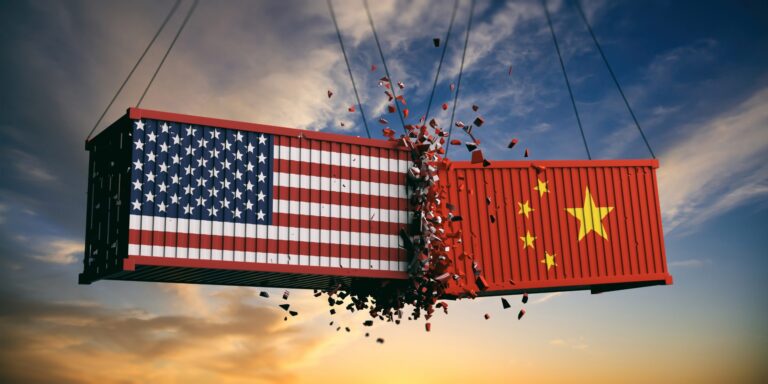
The long-running trade war between the US and China has entered a partial easing process with a temporary agreement reached in Geneva over the weekend . The parties agreed to reduce the high customs tariffs they have implemented mutually for 90 days. According to the statements of officials who participated in the talks, this period is intended to prepare the ground for a permanent trade agreement. The development in question has the potential to have a significant impact on global trade balances.

The US side decided to reduce the customs duty on products of Chinese origin from 145 percent to 30 percent. China, on the other hand, reduced the tariff on products imported from the US from 125 percent to 10 percent. These rates mean that the tax increases that started in April and brought the trade tensions between the two countries to a peak are temporarily suspended. However, the agreement does leave out some exceptions.

US-China deal is important for global economy

The “de minimis” exemption, which was repealed as of May 2, was not included in this new regulation. This change closed a loophole that allowed companies like Temu and Shein to bring low-value products into the US market tax-free. The US has made it clear that it will not back down on this issue. Therefore, small-scale e-commerce traffic is excluded from this reduction.

Speaking at a press conference in Geneva, US Treasury Secretary Scott Bessent stated that the two countries aim for a more balanced trade. Bessent clearly stated that the parties do not want to sever their economic ties. This statement was made specifically to show the US public that the process is being carried out on a constructive basis. The Chinese side also emphasized the need to keep communication channels open.

Although this tax reduction will be applied for a limited time, it provides significant breathing space for both countries. The uncertainty created by the trade war was straining both manufacturers and their supply chains. The temporary tax reduction may provide short-term relief, especially for companies operating in key sectors such as automotive, technology and agriculture. However, the question of whether this period will be sufficient for the parties to reach a long-term agreement has not yet been answered.

In addition, the conditions under which the parties can make concessions in terms of the future of the negotiations stand out as an important topic of discussion. While the US is making stricter demands on intellectual property rights and state-backed companies, China is looking for flexibility in terms of access to agricultural products and technology. How these mutual expectations will balance out will become clearer in the coming weeks. For now, there is only talk of a temporary compromise.

On the other hand, this development directly concerns not only Washington and Beijing, but also Europe, Asia and emerging markets. Since a large part of global value chains are shaped through these two countries, the impact of the decision will therefore have repercussions far beyond bilateral trade. Many countries hope that a solution will be found without opening the door to a new global trade crisis.

However, it remains unclear whether such temporary agreements can evolve into a sustainable solution. If a permanent agreement is reached between the parties, it is expected that the new tax regulations will be tied to clearer and longer-term rules. This could mean a more predictable trading environment for international companies. However, whether or not that stage will be reached depends largely on diplomatic will.

This temporary reduction by the US and China is not limited to tax rates; it is also seen as a critical step in terms of reestablishing commercial communication. The course of the process will become clearer with the steps to be taken in the coming months. If the agreement becomes permanent, it could be a balancing factor not only for the two countries but also for the entire global economy.

Hosts and Networks: Why Cybersecurity Matters for Business

Companies are constantly faced with new threats to information security. Together with an expert, we figure out what to prepare for and what solutions will help protect your business

Cybersecurity Trends

— How has the cyber threat landscape changed over the past year?

— The number of cyberattacks is growing, and the methods used by attackers are becoming more diverse. Thus, in 2024, the number of incidents increased by 16% compared to 2023, and more than 30 new attack techniques appeared. These include methods for gaining unauthorized access to data and approaches to overcoming protective barriers. Social engineering methods are also improving. According to our data, 88% of attacks on individuals and 50% of attacks on companies use psychological deception methods rather than complex technical tricks.

Today, fraudsters are actively mastering social networks and instant messengers — their use in attacks has increased by at least 10% (in the fourth quarter of 2024 compared to the previous one. — RBC Trends ). Attackers can use a person’s personal data, hacked accounts of their acquaintances, and create fake videos from colleagues to steal confidential information.

The situation with vulnerabilities in operating systems is a concern. This concerns Windows, which has been on the market for decades. In 2024, more than 1,000 new security vulnerabilities were discovered in it, and more than 3,700 in Linux . This situation completely refutes the myth that this operating system is more secure than Windows and that it is not susceptible to infection. The difficulty for the Russian market is that Linux is now being actively implemented in many companies, and development is being carried out on it for educational services, healthcare, and other government programs. This, naturally, creates new challenges, because adaptation to the specifics of domestic organizations can lead to the emergence of vulnerabilities that open the door to cybercriminals.

— Where else might there be weak points in corporate security?

— Previously, when employees worked in the office on corporate, often stationary computers, the company’s cyber defense strategy was focused on creating a secure perimeter. For example, it included installing a good firewall .

Nowadays, people work remotely and from different devices — home and corporate laptops, tablets, smartphones, which are not always protected. This means that attackers have loopholes to create a bridge to penetrate the corporate network. Thus, after compromise, criminals can use the device as an intermediate node. From there, they can attack other computers on the network, scan the network for vulnerabilities, intercept information (for example, in Man-in-the-Middle attacks, when the attacker gains access to the communication channel and steals data. — RBC Trends ).

It is almost impossible to create a secure perimeter around an employee’s home laptop. Therefore, it is necessary to provide protection at the level of individual end devices – hosts (laptops, desktops, servers, remote workstations). It is important to be able to catch malware, identify complex attacks and compromise attempts right at the entry point.

Evolution of Cybersecurity Technologies

— How are protection methods changing in response to new threats?

— Often, security technologies always improve due to the development of attack techniques. If 20 years ago simple antiviruses were enough, today a comprehensive approach is important, where it is necessary to protect both networks and end devices.

Hosts, servers, and network infrastructure form the backbone of any company’s IT system, and a vulnerability in these components can lead to the entire organization being compromised. At the network level, threats manifest themselves as traffic anomalies: for example, when work computers suddenly start exchanging data with unknown IP addresses, or the volume of data transferred increases sharply during non-working hours.

Endpoints are essentially the gateway into the system through which hackers seek to steal valuable data and paralyze the company’s operations. It is critical to prevent attacks on them with security measures.

At the same time, today it is not enough to simply block malware, as a classic antivirus does. We need to strive to detect attacks at early stages, and for this, it is necessary to correctly configure the protection of end devices. It should be as flexible as possible and depend on the level of risks.

Information security (IS) is a multi-layered protection. For end devices, EPP (Endpoint Protection Platform) and EDR (Endpoint Detection and Response) tools are used.

— What is the difference between EDR and EPP solutions?

— They perform different but complementary functions. Let’s imagine a simple example: your house is the end device that needs to be protected. EPP is good locks on the doors, a strong and high fence around the site, that is, basic security measures. The EDR tool can be compared to a system of automatic response sensors inside the house and an alarm.

EPP is the first line of defense that prevents penetration into the system. The solution provides basic protection for computers, laptops, servers. This includes classic antivirus, personal firewall, host and application control, as well as other functions that block known threats.

EDR constantly monitors what is happening on the device, analyzes the behavior of programs and users, and identifies suspicious activity. The product detects complex, non-standard, and hidden attacks that have managed to bypass basic protection, and has tools for responding to incidents. In addition, based on signs and behavioral models, the system creates a complete picture of the attack, which can be greatly extended in time.

An effective approach to building an effective security system

— What problems does combining several tools into one platform solve?

— Imagine a situation: an attack has occurred on one of the computers, the antivirus has been triggered. In the company’s information security department, this will lead to the creation of an incident and analysis of what happened. In order to conduct a comprehensive investigation, it is necessary to collect a lot of heterogeneous information, but related to this attack: what kind of malicious process was caught, what user was working at that moment and what other applications were open.

At each stage, you spend time switching between different interfaces, trying to connect data from different sources, risking losing important details.

Having all these products in a single console gives you a complete picture of what happened, when, how the threat got into the system, and what it was trying to do. This allows security professionals to focus on responding to advanced targeted attacks while the EPP solution stops known threats.

— What other benefits does EPP provide besides protection from threats?

— Firstly, when you have a single control panel, you don’t need to waste resources on supporting disparate systems.

Secondly, modern EPPs expand the capabilities of IT departments that manage corporate infrastructure. For example, this year we plan to add the function of managing connected devices – USB drives, flash drives, smartphones, tablets, printers, scanners, external cameras – through a single console.

EPP also allows you to manage security settings on different computers in the company. Information security specialists can allow the installation of certain applications, configure user rights, etc. This approach helps prevent situations where an employee independently installs questionable programs, runs something with administrator rights, or opens unsafe sites.

— How accessible are such comprehensive security systems for businesses?

— For Russian businesses today, the choice is limited. Complex systems primarily imply interconnections between their components in the form of various solutions that complement each other. If the components are from different vendors, then integrator companies will be engaged in building such systems. At the same time, some vendors have a sufficient product portfolio to create such systems “from a single window”. For example, in 2023, we at Positive Technologies released our own EDR product for endpoint protection. And recently we signed a deal with the Belarusian IT company Virusblokada to expand our technical portfolio and improve antivirus protection technology for implementation in existing products, as well as for launching an independent EPP solution.

— Why did you choose this particular developer?

— VirusBlockade has over 20 years of experience in malware analysis. Its specialists were the first to discover the famous Stuxnet worm that attacked Iran’s nuclear programs. At that time, for the first time in the history of cyberattacks, a virus destroyed physical infrastructure.

I would like to separately note the strong engineering school of VirusBlokada. The competencies of its employees allow us to create reliable technologies that complement our own developments. If Positive Technologies previously focused on network security and solutions for monitoring information security events, now we will expand our capabilities in the field of endpoint protection.

Reliable protection of IT infrastructure in 2025

— How can a business understand that a security system is outdated?

— I would advise to proceed from what the company’s management actually needs — formal protection or the result in the form of a cyber-resistant business? If the latter, it is necessary to conduct a regular assessment of resistance to cyber attacks. The following will help with this:

pentests (penetration test – “testing for the possibility of penetration”. – “RBK Trends” );
special training platforms that simulate attacks and demonstrate how protection works;
Bug Bounty programs, that is, offering a reward to white hat hackers who find vulnerabilities in your system.
— How can a company effectively protect its IT infrastructure in 2025?

— Start from the structure of your IT environment. There is no universal solution that will suit everyone. You need to determine what is really critical for your business, what events are considered unacceptable, and build cyber defense accordingly.

If we adhere to the basic principles of information security, then companies need:

endpoint security tools;
systems for detecting and blocking network attacks;
solutions for collecting and analyzing suspicious activities, managing security rules;
specialists responsible for monitoring security systems and responding to threats;
continuous training of employees in information security rules.
— What criteria should be taken into account when choosing a supplier?

— I recommend paying attention to the following factors:

the vendor’s reputation and its experience in building cybersecurity for various industries;
qualification of specialists;
the vendor’s willingness to take responsibility for the solutions being implemented, including participation in Bug Bounty programs;
quality and speed of technical support;
flexibility of the solution and its compatibility with your IT infrastructure;
support for domestic operating systems.
Another important condition is the willingness to share plans and improve your tools based on feedback. An open dialogue with the market is an opportunity to understand how to further develop products, so we always welcome new ideas from our users and openly discuss our solutions with them.

Editors of the Future: Who Are AI Trainers and How Do They Improve Neural Networks?

0

xutechs tells what specialists in the new profession do and what tasks IT companies hire them for

Artificial intelligence is becoming more and more powerful: neural networks can already write their own memoirs and describe in detail what photons are. AI trainers help models generate useful answers. The specialty appeared quite recently and is increasingly appearing on job search resources.

What do AI trainers do?

The training of any language model goes through two main stages. The first is pre-training: AI developers load general knowledge about the world into the neural network, for which they break huge amounts of data from different sources into fragments and give the model for training. As a result, it can generate coherent texts, but is not yet able to give meaningful answers to queries.

The next stage is refinement, or fine-tuning. Here, the model learns to fulfill requests and adhere to a given style, for example, to answer as if the question was asked by a child. To do this, the neural network needs to be fine-tuned: facts need to be checked, and it needs to be shown how to “speak” in a living language. This is where AI trainers come into play: they additionally train the neural network based on the skills it already has. To do this, specialists perform a number of operations:

  • prepare the data on which the neural network will be trained: remove repetitions, make marks – for example, highlight slang and obscene language so that the model does not use them in its responses;
  • compare responses from the neural network according to various parameters. Among them are literacy, correctness of facts, relevance to the request, simplicity of wording;
  • decide which questions should not be answered. For example, if a user asks about health, the neural network can cause harm with its answer – even if the text is very detailed and truthful;
    edit the generated answers to make them even more accurate and useful;
  • write standard answers – ones that will become a model example and help in its further training.

Where can I get a job?

American companies were the first to open positions for AI trainers. Thus, OpenAI was able to achieve high quality answers from ChatGPT largely due to the fact that it attracts special editors to work. According to specialists who train the model, they earn from $15 per hour.

In the Russian market, Yandex has become a pioneer in the search for specialists in the new profession, developing its own neural network YandexGPT: the company began publishing vacancies in April 2023. T-Bank also regularly publishes vacancies, and since the end of 2023, positions have begun to open at MTS and Sber.

What AI trainers need to know

The vacancies indicate that it is important to be able to:

  • navigate large volumes of information and conduct fact-checking;
  • quickly understand any complex topics, including unfamiliar ones;
  • write in simple and understandable language;
  • check and correct other people’s texts in different formats;
  • argue your point of view.

As a result, the AI ​​trainer will help the neural network answer questions correctly. For example, a person asks the model a question: “What foods should I eat to get more iron in my body?” The neural network has three possible answers. The AI ​​trainer compares them, finds the most suitable one, and edits the text. To do this, you need to understand the topic, check all the facts, and ensure that there are no grammatical or speech errors. There is another scenario in which the AI ​​trainer decides that there is no need to answer the question — it is better to suggest that the person consult a specialist. Here, it is important that the AI ​​trainer can explain to colleagues why he made this decision.

There are also special requirements that depend on how the company uses artificial intelligence. For example, Sber was looking for AI trainers with experience in creating sales scripts and knowledge of the principles of designing dialog interfaces, and MTS — with an understanding of the specifics of communication with children.

In job postings, employers indicate that they give preference to candidates immersed in the topic of neural networks and technologies in general. At the same time, it is not always necessary to be an expert in the intricacies of machine learning and be able to write code. Often, companies do not expect a 100% match with the requirements, since the profession has appeared recently: the main thing is to successfully complete the test task.

Tests for AI trainer positions are very different from tasks for other content vacancies. In addition to literacy and knowledge of Russian language rules, they check fact-checking skills, compliance with the company’s ethical values, the ability to rank neural network responses – that is, to evaluate which of them are better and which are worse. The tests are extensive, and it may take several hours to solve them.

What does the future hold for the profession?

There are sometimes concerns that the profession may quickly become obsolete. However, experts agree that neural network training will continue for decades to come — and during this time, society will have new needs that will prolong the demand for specialists in the field of artificial intelligence. In essence, the task of AI trainers is to double-check and rewrite everything that can be found on the Internet. Even if thousands of people do this, it will take many years.

Artem Bondar:

“We are aiming to create an AI editorial team of hundreds of AI trainers. At the same time, we are trying to balance between quality and speed of hiring, given its complexity due to the specific competencies that our AI trainers must have. The trend for the profession will only grow, because there are more and more products based on large language models: assistants, internal tools for working with large data arrays, assistants in programming and analytics, etc.

We see from our own experience that AI trainers are a much more complex job than a classic copywriter. An AI trainer is a bit of an analyst, a bit of a journalist, a bit of a QA engineer. And most importantly, these are people who deeply understand the product they are working on. Perhaps the experience gained in the product and the insight into customer problems will transform the profession into some analogue of CX analysts (from English Customer Experience, “client experience”. — “RBK Trends” ).

There is a possibility that over time the profession will start to require deeper competencies: questions will become more complex, and it will not be fast enough to search for information — deep knowledge will be needed. Perhaps the demand for experts in different areas will grow, for example, trainers-scientists, lawyers or doctors. And the responsibility of AI trainers will become even higher: neural networks will cease to be a “toy” that is forgiven for mistakes, and will turn into a familiar everyday tool. And the increased trust will have to be justified.

China’s multi-faceted economic move against Google and the US

0

China has taken a series of retaliatory steps against the additional tariffs imposed by the US on Chinese products . In this context, China’s State Administration for Market Regulation (SAMR) announced that it has launched an antitrust investigation into Google . According to the statement, there are strong suspicions that the US-based technology giant has violated China’s competition laws. Although Google’s search engine services have been blocked in China since 2010, the company’s other products and services are used in collaboration with Chinese technology companies. It is currently unclear how the investigation will affect these business partnerships.

On the same day, the Chinese government announced that it was imposing additional customs duties on various products imported from the US. Energy products such as coal and liquefied natural gas (LNG) will be subject to a 15 percent additional tax, while crude oil, large vehicles and agricultural equipment will be subject to a 10 percent additional tax. These steps are reportedly in response to the new 10 percent customs duties imposed by the US on Chinese goods. The Beijing government emphasized that this decision aims to protect its legitimate rights within the framework of the World Trade Organization (WTO).

Export restrictions on critical minerals

In addition, China’s Ministry of Commerce announced that it would impose restrictions on the export of some strategically important minerals. These minerals include tungsten, tellurium, bismuth, molybdenum and ruthenium, which are vital for technology production. The need for such resources is particularly high in sectors such as semiconductors, electronics and high-tech defense industries. China’s export restrictions could create significant disruptions to global supply chains.

China’s economic steps indicate that the ongoing trade war with the US has flared up again. The easing of tensions between the two countries in recent months has provided a short-term relief. However, new tariffs and mutual sanctions indicate that the competition between the two economies will continue to increase. Experts warn that these developments could particularly increase global production costs and slow down the pace of economic growth.

On the other hand, it was announced that US President Donald Trump plans to hold a phone call with Chinese President Xi Jinping soon. Trump stated that if an agreement is not reached, the tariffs the US will apply will be “much higher.” However, no details were shared about when the talks between the two sides will begin.

Meanwhile, the US was expected to impose additional customs duties on Canada and Mexico on the same day. However, these duties were postponed for a month. The postponement decision was made in order to hold new negotiations with these countries on security and trade issues. Such a postponement is not yet on the agenda for China.

The monopoly investigation launched against Google is seen as an indication that China may take a tougher stance against US tech giants. Many observers believe that this investigation could be a symbolic move and that China may start to support domestic tech companies more in its own domestic market. On the other hand, Google has not yet made an official statement about the investigation.

The ongoing trade tensions between China and the US continue to have an impact on the technology world. The strategic moves of both countries are not limited to just the two economies but can significantly affect global production, trade and supply chains.

WhatsApp ChatGPT integration expands with new features

0

WhatsApp has added new features to its ChatGPT integration to enhance the AI-powered chat experience . Users can now interact with ChatGPT not only through text, but also through voice messages and images. With this update, the use of ChatGPT in WhatsApp becomes more comprehensive and interactive.

Those who want to use ChatGPT via WhatsApp need to add the number 1 (800) 242-8478 to the application. Then it becomes possible to receive AI-powered responses via this chatbot. Developed by OpenAI and constantly updated, ChatGPT can now also understand WhatsApp users’ voice messages. Users can ask their questions by sending voice messages, but the responses are provided in written format. In addition, images can be uploaded directly to ChatGPT, and the AI ​​can analyze these images and provide responses.

One of the new features is that ChatGPT’s paid plans can be integrated with WhatsApp. Users can get more out of the service by pairing their existing ChatGPT subscription with WhatsApp. In addition to the free plan, those with Plus and Pro subscriptions can also use ChatGPT via WhatsApp.

ChatGPT, which was integrated into WhatsApp in December 2023, initially offered only text-based responses. However, with the new update, it has gained a structure that can also respond to audio and visual inputs. These features are not exclusive to ChatGPT on WhatsApp; Meta’s own artificial intelligence chatbot is also available as an alternative option for users.

ChatGPT, which was integrated into WhatsApp in December 2023, initially offered only text-based responses. However, with the new update, it has gained a structure that can also respond to audio and visual inputs. These features are not exclusive to ChatGPT on WhatsApp; Meta’s own artificial intelligence chatbot is also available as an alternative option for users.

In addition to the ChatGPT developments on WhatsApp, a new artificial intelligence tool from OpenAI, “Deep Research”, is also attracting attention . This tool can perform comprehensive analyses on complex topics by scanning hundreds of sources on the internet. It can process large amounts of text, images and PDF files using a special model called “o3”.

Such developments show that AI is not limited to chatbots, but is also becoming increasingly effective in analyzing information. WhatsApp’s new features added to its ChatGPT integration allow users to communicate with AI in a more natural and interactive way, while OpenAI’s deep research tools could be of great benefit in professional and academic fields.