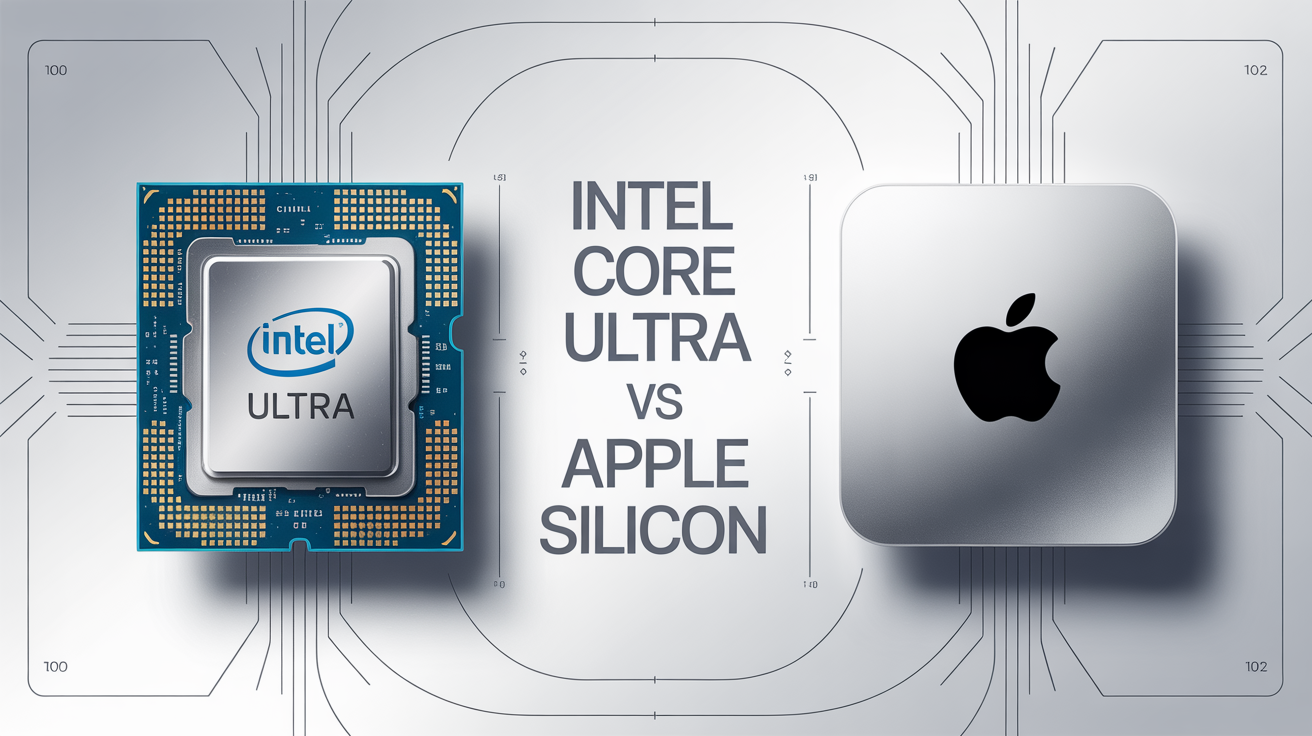
By 2026, the mini PC is no longer a compromise. It has become a miniature workstation, sometimes more powerful—and above all, smarter—than the consumer towers of just a few years ago. But beneath this move upmarket, a divide has emerged: two visions of the “compact desktop” are clashing.
On one side, Intel and the Windows ecosystem are betting on modularity, extensibility, and open standards. On the other, Apple is pushing the opposite idea: controlling everything to optimize everything, even if it means closing doors.
Ultimately, choosing a mini PC today is less about answering “what do I do?” than “how do I like to work?”.
Intel Core Ultra mini PCs: AI in kit form, but ready to evolve
Machines based on Intel Core Ultra processors (and their successors) have a cultural advantage: they come from the PC world, so they think in terms of interchangeable parts . Asus, Geekom, Minisforum, and others are building compact cases that increasingly resemble miniature workstations.
The simplest — and most powerful — promise is modularity : DDR5 RAM that is often upgradeable (sometimes very high depending on the chassis), expandable storage via one or two M.2 slots, and, on the best-equipped models, high-speed outputs that pave the way for eGPUs.
It’s not just a convenience: it’s a guarantee. For local AI, heavy video editing, or growing development environments, being able to increase RAM and storage is a very concrete way to postpone obsolescence.
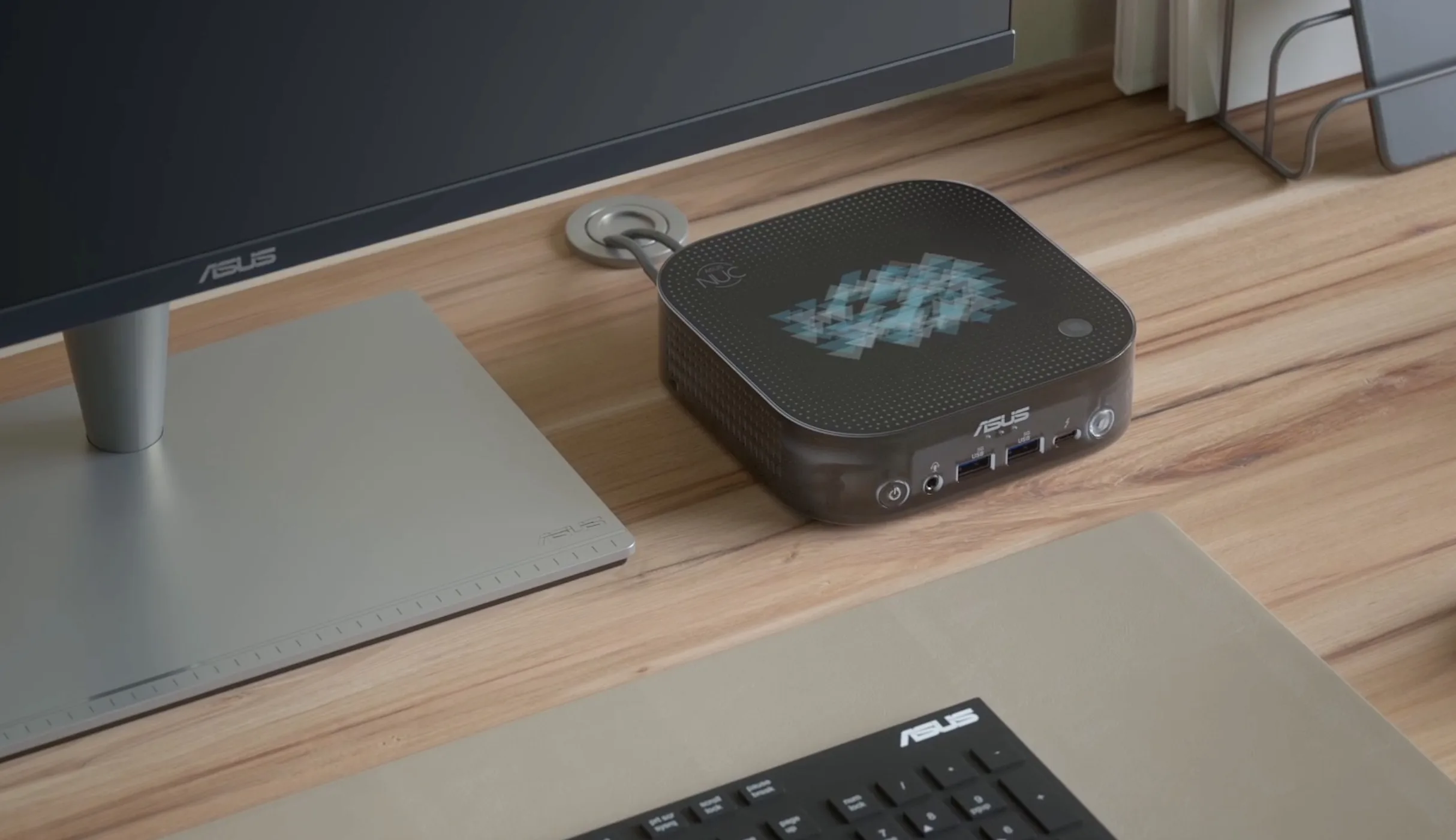
And then there’s the “wild card” that Macs don’t play: GPU freedom . Thunderbolt (and sometimes OCuLink on certain performance-oriented machines) allows you to transform a silent box into a rendering, 3D, or gaming machine—on demand. For workflows that rely on CUDA, massive VRAM, or specific Windows tools, this is a flexibility that the Apple ecosystem doesn’t really compensate for.
On the AI front, Intel champions an open approach : you can switch between Windows and Linux, play with ONNX, OpenVINO, DirectML, PyTorch… and tinker as much as you like. For engineers, tinkerers, business app users, or those who want to experiment with open-source models, it’s the least frustrating path.
The downside: modular PCs also require choices . Configuration, drivers, compatibility, thermal management depending on the workload. It’s not difficult, but it’s not “invisible.”
Apple Silicon Mac mini: less freedom, but exceptional fluidity
Apple takes the opposite approach: no modularity, but an impression of coherence that borders on a “ sealed system… and happy to be so . ” The M-series Mac mini doesn’t aim to be transformable. It aims to be optimal.
The key weapon is unified memory. Where a PC juggles system RAM and GPU VRAM, Apple pools everything into a single, very high-speed memory pool. The result: certain AI tasks, creative work (video, photo, audio), and hybrid CPU/GPU workloads run with sometimes astonishing efficiency at equivalent size and noise levels.
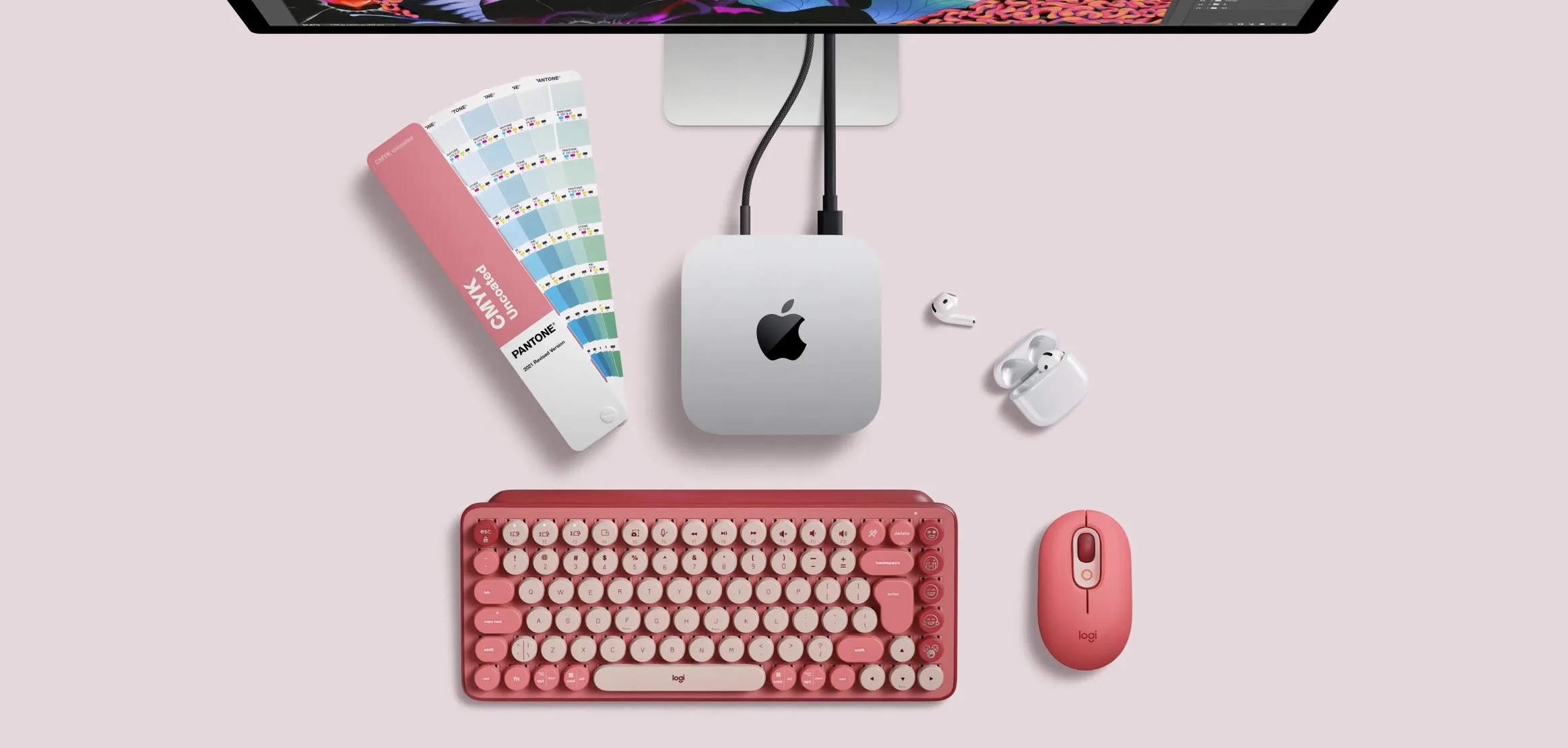
And that’s precisely the point: the Mac mini excels in a criterion that technical specifications don’t adequately convey, but that people experience every day: silence. While some Windows mini machines become noisy as soon as you push generative AI or encoding, Apple Silicon often maintains a very quiet acoustic signature. In a studio, an open-plan office, or simply at home when you want to work for extended periods, this is a real comfort.
If you’re already immersed in the Apple ecosystem, the argument becomes almost automatic: Final Cut, Logic, Xcode, optimized apps… everything seems to be converging towards this format. And if you’re developing for iOS/visionOS, there’s no debate at all: the Mac isn’t a choice, it’s a necessity.
The downside: what isn’t purchased initially can’t be added later . If your AI usage changes abruptly (more demanding models, skyrocketing memory requirements), the machine doesn’t “upgrade.” It has to be replaced.
So, which one to choose? Ask yourself this question: do you want a machine that adapts… or a machine that disappears behind your work?
That’s where your angle becomes truly powerful: it’s not “Intel vs Apple”, it’s modularity vs integration.
Choose an Intel Ultra mini PC if…
- You like to keep your hand in.
- You upgrade, you test, your needs change.
- You want frictionless Windows (or Linux), business apps, and the eGPU option to go further when needed.
- You envision local AI as a playground that grows with you.
Choose an Apple Silicon Mac mini if…
- You want the machine to erase itself.
- You prioritize silence, stability, quality of experience, and perfectly oiled creative or development tools.
- You already work in the Apple ecosystem — or you are forced to by your targets (iOS/visionOS).
The right conclusion in 2026: mini PCs are no longer “small machines.” They are computers that reveal your personality. Intel is the path to freedom. Apple, the path to control. And the mistake isn’t choosing one or the other: it’s choosing a philosophy that doesn’t match your way of working.